Pages

Showing posts with label American Dietetic Association. Show all posts

Thursday, September 13, 2012

September 13, National Celiac Disease Awareness Day


Celiac disease is an immune reaction to gluten, a protein found in wheat, rye, and barley. The disease affects about one in 100 people in Europe and North America.

The Awareness Campaign provides current, comprehensive, science-based information about the symptoms, diagnosis, and treatment of celiac disease, also known as celiac sprue, nontropical sprue, and gluten-sensitive enteropathy.


The key to understanding the Gluten Free diet is to become a good ingredient label reader. The following ingredients should not be consumed. They come from prohibited grains: barley, rye, triticale, wheat (durum, graham, kamut, semolina, spelt), malt, malt flavoring, malt vinegar (generally made from barley—verify the source).

Celiac Disease Foundation 
Public Service Announcement


Riceworks Sponsors Interview With 
Celiac Disease Expert Shelley Case


Resources
1. NIH: Celiac Disease Awareness Campaign
2. 
Celiac Disease Foundation
3. Academy of Nutrition and Dietetics, Celiac Disease

4. Rachel Begun, RD, "The Gluten Free RD"
5. Shelley Case, RD  


Saturday, September 3, 2011

The American Dietetic Association Announces
the Theme for National Nutrition Month, March 2012

March 2012 starts the American Dietetic Association annual National Nutrition Month® Campaign.
The theme  - 
"Get Your Plate in Shape".

The American Dietetic Association created National Nutrition Month® as a nutrition education and information campaign to focus attention on the importance of making informed food choices and developing sound eating and physical activity habits.


The fifth annual Registered Dietitian Day
will be celebrated
on Wednesday, March 14, 2012.
Registered Dietitian Day increases awareness of registered dietitians as the indispensable providers of food and nutrition services and recognizes RDs for their commitment to helping people enjoy healthy lives.


Wednesday, June 15, 2011

'Waist Management' an Important Part
of Every Man's Health

FOR RELEASE JUNE 15, 2011

CHICAGO – While it isn’t typically associated with men, watching your waist size and, if needed, losing a few inches around the middle can have significant health benefits for men, according to the American Dietetic Association.

“For men, it’s more about waist management than weight management,” says registered dietitian and ADA Spokesperson Manuel Villacorta. “For men to be fit and healthy, we need to focus on our guts.”

Abdominal fat carries more potential health risks than fat in other parts of the body. Research has shown that men’s risk for chronic conditions like heart disease, type 2 diabetes and some cancers increases as their waistline expands. The culprit: the fat around the body’s internal organs, known as visceral fat.

“For the average male, a waistline of 40 inches or more is getting into the disease-risk zone,” Villacorta says.

Registered dietitians say men’s questions, interests and needs regarding food and nutrition tend to focus on such areas as being healthier; looking good; performing at their best; having more energy; recovering from injuries and learning how they can excel through healthy eating and activity habits.

“Eating better, decreasing stress levels, engaging in physical activity and getting at least seven to nine hours of sleep every day can help keep a man’s midsection under control,” Villacorta says. “Take positive steps to get your waist size down, like reducing portion sizes and cutting back on alcohol, combined with regular exercise,” he says.

Registered dietitian and ADA spokesperson Jim White says education is vital for men to take charge of their “waist management” and their overall nutrition and health.

“Just as it’s important to know your blood pressure, cholesterol, blood sugar and weight numbers, men need to know their waist circumference.” White says. “So, get out the tape measure.”

According to White, to correctly measure waist size, bring the tape measure around your back (over your bare skin) to meet in the front on your natural waistline – typically a little above the belly button at the narrowest part of your torso. Don’t hold the tape measure too tight or too loose. Write down the result and use it as one guide for overall health.

“Being fit and healthy is important for men and women alike,” White says. “Men can start by taking charge of the food they eat and getting more exercise. You can lose extra belly fat, look better, and your health will also improve across the board.”

The American Dietetic Association is the world’s largest organization of food and nutrition professionals. ADA is committed to improving the nation’s health and advancing the profession of dietetics through research, education and advocacy. Visit the American Dietetic Association at http://www.eatright.org/ .

Tuesday, June 14, 2011

ADA Urges All the Men In Your Lives
Take Ownership of Your Health and Nutrition

American Dietetic Association
Urges All the Men in Your Life:
Take Ownership of Your Health and Nutrition


CHICAGO – When was the last time your father, brother, husband or partner cooked a meal, asked for a second helping of vegetables or did the grocery shopping? If recent trends are a guide, it happened recently, according to the American Dietetic Association.


“More than ever, men are playing a role in buying and preparing the food that is eaten in their household,” says registered dietitian Martin M. Yadrick, past president of the American Dietetic Association. “Not only is budgeting finances important, but men are also realizing the need for healthy calorie budgeting, too.

“Think of eating in terms of contributing to your 401k. Doing the right thing over time will make a huge difference down the road,” Yadrick says. “My advice is: Guys, take ownership of all your personal health needs.”


Registered dietitians say men’s questions, interests and needs regarding food and nutrition tend to focus on such areas as being healthier; looking good; performing at their best; having more energy; recovering from injuries and learning how they can excel through healthy eating and activity habits.


For men of all ages and all stages of life, eating right and being physically active are as important to health as annual physical exams and visits to the dentist, Yadrick says.


“For men as well as women, good nutrition is vital, but a man’s nutrient needs are unique due to higher muscle mass, larger body size and hormonal differences.”


Men can serve as an example of healthful eating – at work or at home – by making smart foods choices when they’re around colleagues, children and spouses.


“Cut down on meat portions and fill up the extra space with fruits, vegetables, whole grains, beans, nuts and seeds,” Yadrick says. By including these foods on your plate every day, men can benefit their health and potentially stave off obesity, heart disease, type 2 diabetes, certain cancers and dementia.


“You can stay healthy and active longer – and that includes your sex life and fertility – if you make good choices when you eat,” says Yadrick.


With research showing that making small dietary and lifestyle changes every day goes a long way toward improving your overall health picture for life, Yadrick encourages all men to jump aboard the eating right bandwagon.


“Adding nutrient-rich foods like fresh fruits and vegetables at every meal is a great step in the right direction. Cutting down on portion sizes can make a huge difference in your overall calorie intake,” Yadrick says.

“It’s the results that matter to men, and our taste buds and health can provide the proof that eating right pays off.”


The American Dietetic Association is the world’s largest organization of food and nutrition professionals. ADA is committed to improving the nation’s health and advancing the profession of dietetics through research, education and advocacy. Visit the American Dietetic Association at http://www.eatright.org/.

Monday, June 13, 2011

Featured Dietitians
Kids Eat Right Volunteers,
Sharing the Monday Message


Kids Eat Right is a joint initiative from the American Dietetic Association (ADA) and American Dietetic Association Foundation. Kids Eat Right supports the efforts of the White House to end the childhood obesity epidemic within a generation. The goal of Kids Eat Right is to educate families, communities, and policy makers about the importance of good nutrition.

The Kids Eat Right website centers around the theme "Shop-Cook-Eat." The goal is to bring families together each day for nutritious meals by providing simple and easily to follow tasks.


How to shop for healthy foods for your family.How to cook foods to get the most nutrient value, including tips and recipes.The benefits of eating together as well as tips to eat when away from home.


Share the Monday Message Campaign involves ADA member volunteers who distribute weekly advice through social media channels (such as Facebook, Twitter, blogs, etc.). The Kids Eat Right campaign provides resources to help ADA members become recognized leaders in childhood obesity prevention. Volunteers then educate the community on shopping ideas, cooking tips, eating right and recipes.

The following slides are examples of Monday Messages shared over the last seven months. Links to the articles are provided below. I encourage you to visit the Kids Eat Right website where you can view all the available messages.  


http://bit.ly/jBWbEd
http://bit.ly/e79Y7W 
http://bit.ly/fEVfe3
http://bit.ly/mbQdso
http://bit.ly/hDyqZZ
http://bit.ly/hkgrCT
http://bit.ly/f8Av6b
The Kid-Friendly Kitchen
http://bit.ly/fM9Tnm

http://bit.ly/hEQ8uF


Consumers, Caregivers, Educators, Journalists, Policy Makers 
To learn more about Kids Eat Right, visit Kids Eat Right

American Dietetic Association Members
To become a volunteer, visit About Kids Eat Right and
follow the link to Sign Up as a Campaign Volunteer


Dietitians-Online and Wellness News employs adults with "Special Needs" (Cerebral Palsy, Autism, Down Syndrome, Muscular Dystrophy). The educational materials are designed for educators and individuals with limited reading skills. For additional information, please contact Dr. Sandra Frank at recipenews@gmail.com.

Thursday, March 31, 2011

Creating Meals with Many Colors


During the past 4 weeks we introduced the benefits of eating foods with different colors (red, pink, orange, yellow, blue, purple, white and black).  Today is the last day of National Nutrition Month, so it's time to create meals using the many colors. The video illustrates the beauty of adding color to your meals. 


Tuesday, March 29, 2011

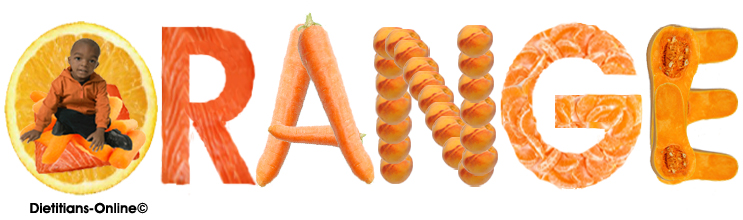
Introducing the Yellow and Orange Foods
National Nutrition Month

Yellow and Orange Foods
Hosts: Yoko, York and Oliver


Yellow Foods: Apricots, Bananas, Corn, Garbanzo Beans, Golden Apples, Golden Flax Seed, Golden Raisins, Grapefruit, Honey, Lemon, Lemongrass, Pears, Pineapple, Saffron, Spaghetti Squash, Squash Blossoms, Sweet Corn, Yellow Beans, Yellow Lentils, Yellow Peppers, Yellow Summer Squash, Yellow Wax Beans

Orange Foods: Butternut Squash, Cantaloupe, Carrots, Cheddar Cheese, Citrus Fruits, Clementine, Creamsicle, Mandarin Oranges, Mangoes, Nectarines, Orange Jello, Orange Peppers, Orange Tomatoes, Oranges, Papaya, Peaches, Pumpkin, Rutabagas, Salmon, Sweet Potatoes, Tangerines, Whole Grains, Yams

Do you know any other Yellow or Orange foods?
About Yellow and Orange Foods
Most orange and yellow fruits and vegetables contain antioxidants, such as vitamin C and the phytonutrients carotenoids and bioflavonoids. The foods are also rich in fiber and many vitamins and minerals.

Carotenoids give fruits and vegetables their color and are converted into vitamin A in the body. Vitamin A is needed for vision, new cell growth, healthy skin and tissues, and night vision. Carrots and sweet potatoes are rich in beta carotene.

Citrus fruits, mangoes, nectarines, peaches, peppers, and sweet corn contain beta cryptoxanthin, a carotenoid that may help maintain the respiratory tract and reduce the risk of lung cancer. Hesperidin is a bioflavonoid found in citrus fruits and juices and may lower the risk of heart disease.

Vitamin C is in citrus fruits and helps maintain healthy teeth and gums; improves circulation; enhances iron absorption and helps resist infection.

Salmon is a great source of omega 3 fatty acids and may help reduce the risk of heart disease.

Yellow lentils are high in fiber, folate and other B vitamins. Fiber helps prevent constipation. Folate is important in producing healthy red blood cells, preventing birth defects and reducing the risk of strokes, heart disease and some cancers.

Ways to Increase Yellow and Orange Food Intake:
• Add apricot, banana, oranges, peaches, and/or papaya to cereals or salads. They will bright-up your morning.
• For snacks or food on the go, choose any of the rich yellow and orange fruits and vegetables, for example: apricots, bananas, golden apples, golden raisins, pears, pineapple, carrots, oranges, mangoes, nectarines, papaya, peaches and/or tangerines.
• Add carrots and/or diced peppers (yellow or orange) to salads or main-courses.
• Use sweet potatoes, instead of white potatoes for a change in color
• Eat grilled salmon at least once a week.
• Prepare a butternut squash soup.


Wellness News employs young adults with "Special Needs" (Cerebral Palsy, Autism, Down Syndrome, Muscular Dystrophy). My staff started the project in September 2010. Over the next five months, we would take over 600 photographs of colorful foods in order to create the March presentation for NNM. Many of the photographs are available for purchase with the proceeds going to special need young adults. Contact Dr. Sandra Frank for additional information (recipenews@gmail.com).


Sunday, March 27, 2011

Introducing the White and Black Foods
National Nutrition Month

White and Black Foods
Hosts: Wendy and Brian


Food Sources
White: Cauliflower, Coconut, Garlic, Ginger, Green Onions, Scallions, Horseradish, Jicama, Kohlrabi, Leeks, Millet, Mushrooms, Onions, Parsnips, Quinoa, Shallots, Soy Products, Sunflower Seeds, Tofu, Turnips, White Beans, White Corn, White Sesame Seeds, Eggs, Milk

Do you know any other WHITE foods?

About White Foods
The white food category is diverse and includes fruits, vegetables, grains, milk, eggs, and tofu. The fruits and vegetables are a good source of fiber and tofu is relatively high in protein. Eggs and milk are an excellent source of protein and milk is rich in calcium, vitamin D, potassium and magnesium. Potassium is also found in potatoes, which assists in protein synthesis and carbohydrate metabolism and essential for normal heart function.

White fruits and vegetables contain the natural color pigment anthoxanthins; a type of flavonoid, which range in color from white or colorless to yellow and exhibit antioxidant properties. Allicin is a phytonutrient found in garlic and onions. Allicin may help reduce heart disease, lower cholesterol, reduce the risk of some types of cancer, act as an anti-inflammatory and may function as an antioxidant. Quercetin is another anthoxanthin found in onions and shallots. Quercetin may lower the risk of heart disease and act as an anti-inflammatory.

Ways to Increase White Food Intake:
  Add onions, garlic or shallots to salads, entrees or soups.
  Snack on sunflower seeds.
  Try tofu in soups or prepare as a main-course.
  Add white beans to salads or season and serve as a side dish.

  Try a glass of low fat or fat-free milk at bedtime.


Food Sources
Black: Black Beans, Black Cherries, Black Currants, Black Mushrooms, Black Olives, Black Quinoa, Black Raspberry, Black Rice, Black Sesame Seeds, Black Soybeans, Blackberries, Boysenberries, Prunes, Raisins, Seaweeds, Tamari (Soy Sauce)

Do you know other BLACK foods?


About Black Foods
Black colored foods are rich in antioxidants, fiber, vitamins and minerals. Black Rice contains vitamin E and the antioxidant anthocyanin.  Black Lentils are rich in iron and fiber and may help in wound healing and lowering blood cholesterol.  Blackberries are high in the antioxidant polyphenolic, which may reduce inflammation. Blackberries are also a good source of dietary fiber, vitamin C, vitamin K, folic acid, and manganese. Black Soybeans are high in fiber and protein.  Raisins and prunes help in the treatment of constipation.  Raisins are a good source of fiber, antioxidants, vitamins, minerals, iron, potassium, and calcium. Prunes are a good source of fiber, vitamin A, potassium, and copper.

Ways to Increase Black Food Intake:
  Add raisins to hot cereal or use as a snack.
  Add blackberries or black raspberries to salads or yogurt or carry as a snack.
  Substitute black rice for brown rice.
  Use black sesame seeds on fish or salads.


Wellness News employs young adults with "Special Needs" (Cerebral Palsy, Autism, Down Syndrome, Muscular Dystrophy). My staff started the project in September 2010. Over the next five months, we would take over 600 photographs of colorful foods in order to create the March presentation for NNM. Many of the photographs are available for purchase with the proceeds going to special need young adults. Contact Dr. Sandra Frank for additional information (recipenews@gmail.com).


Friday, March 25, 2011

Introducing the Blue and Purple Foods
National Nutrition Month

Blue and Purple Foods
Hosts: Brooke, Betty, and Peggy

Food Sources
Blue Grapes, Blue and Purple Potatoes, Blueberries, Dried Plums, Plums, Eggplant, Pomegranates, Elderberries, Juniper Berries, Purple Belgian Endive, Purple Cabbage, Purple Figs

Do you know other foods rich in blue or purple?

About Blue and Purple Foods

Blue and Purple fruits and vegetables get their color from a natural plant pigment called anthocyanins. Anthocyanins are an antioxidant and belong to the phytochemicals called flavonoids. Anthocyanins are found in blueberries, grapes and raisins.

Anthocyanins have health-promoting benefits, such as:
·         Reduces the risk of heart disease and stroke.
·         May reverse the short-term memory loss associated with aging.
·         Reduces the risk of several types of cancer.
·         Protects the urinary tract from infections.
·         May help control high blood pressure
·         May help boost the immune system.
·         Protects our cells from environmental damage (harmful free-radicals)

Ways to Increase Blue and Purple Food Intake:
   Add blueberries in muffins, pancakes and hot or cold cereals.
   Grab some plums or raisins for a snack on the go.
   Use Purple Belgian Endive as a main ingredient to a salad
   Use Purple Cabbage when preparing cole slaw.

Definitions
Phytonutrients (or phytochemicals) are found in plants. They are part of what gives fruits and vegetables their colors. Phytonutrients help protect plants from diseases found in the environment and protect us in a similar way. Studies have linked an increase of fruit and vegetable intake with lowering the risk of specific cancers and heart disease. The following list describes how phytonutrients may also help protect human health.
1. Act as an antioxidant.
2. Improves immune response.
3. Improves cell-to-cell communication.
4. Destroys cancer cells.
5. Repairs DNA damage caused by toxins in the environment.

Antioxidants. As the body uses oxygen, there are by-products (known as “free radicals”) that can cause damage to cells. Antioxidants can prevent or slow down the damage caused by these free radicals and decrease the risk of many chronic diseases, such as heart disease and cancer. Antioxidants may also improve the immune defense and lower the risk of infection. Some examples of antioxidants include vitamin A (beta-carotene), vitamin C, vitamin E, lutein, lycopene and flavonoids.


Wellness News employs young adults with "Special Needs" (Cerebral Palsy, Autism, Down Syndrome, Muscular Dystrophy). My staff started the project in September 2010. Over the next five months, we would take over 600 photographs of colorful foods in order to create the March presentation for NNM. Many of the photographs are available for purchase with the proceeds going to special need young adults. Contact Dr. Sandra Frank for additional information (recipenews@gmail.com).


Jonathan Cruz


Wednesday, March 23, 2011

Introducing Red Foods
National Nutrition Month

Red and Pink Foods
Hosts: Robert and Pam


Food Sources
Apples, Beets, Cayenne, Cherries, Cranberries, Guava, Kidney Beans, Papaya, Pink Beans, Pink/Red Grapefruit, Pomegranates, Radicchio, Radishes, Raspberries, Red Bell Peppers, Red Cabbages, Red Chili Peppers, Red Corn, Red Currants, Red Grapes, Red Onions, Red Pears, Red Peppers, Red Plums, Red Potatoes, Red Tomatoes, Rhubarb, Strawberries, Watermelons

Do you know other foods that are Red or Pink?


About Red Fruits and Vegetables.

Red fruits and vegetables get their color from natural plant pigments called lycopene or anthocyanins. Both are
phytonutrients, which have health-promoting benefits, such as:
·         Reduces the risk of several types of cancer, especially prostate cancer
·         Reduces the risk of heart disease
·         Protects our bodies’ cells from environmental damage (harmful free-radicals)
·         Lowers blood pressure
·         Lowers LDL cholesterol
·         Aids in memory
·         Maintains the health of the urinary tract system

Lycopene is a carotenoid and antioxidant. Examples of food sources include tomatoes, watermelon, pink grapefruit, and papaya.  

Anthocyanins, an antioxidant found in cranberries, raspberries, red grapes, strawberries, and other red to purplish fruits and vegetables may help protect cells from damage.

In addition, red fruits and vegetables contain many vitamins and minerals and are rich in fiber. Fiber helps maintain the digestive system.

Ways to increase Red Food Intake:
Add strawberries or raspberries to cereal or low fat yogurt.
Freeze seedless red grapes for a sweet snack.
Add thin slices of red tomatoes or red apples to a sandwich.
Add red kidney beans to soup, salads or rice dishes.
Dice tomatoes and red apples and add to a salad.


A Special Tribute to the Tomato
Time is ripe 
 by Nutrition Information: 172 Calories; 8 g Protein; 18 g Carbohydrates; 3 g Dietary Fiber; 8 g Fat; 3.7 g Saturated Fat; 21 mg Cholesterol; 1229 IU Vitamin A; 24 mg Vitamin C; 97 IU Vitamin D ; 366 mg Potassium; 299 mg Sodium)

Definitions:
Phytonutrients (or phytochemicals) are found in plants. They are part of what gives fruits and vegetables their colors. Phytonutrients help protect plants from diseases found in the environment and protect us in a similar way. Studies have linked an increase of fruit and vegetable intake with lowering the risk of specific cancers and heart disease. The following list describes how phytonutrients may also help protect human health.
1. Act as an antioxidant.
2. Improves immune response.
3. Improves cell-to-cell communication.
4. Destroys cancer cells.
5. Repairs DNA damage caused by toxins in the environment.


Antioxidants. As the body uses oxygen, there are by-products (known as “free radicals”) that can cause damage to cells. Antioxidants can prevent or slow down the damage caused by these free radicals and decrease the risk of many chronic diseases, such as heart disease and cancer. Antioxidants may also improve the immune defense and lower the risk of infection. Some examples of antioxidants include vitamin A (beta-carotene), vitamin C, vitamin E, lutein, lycopene and flavonoids.

Wellness News employs young adults with "Special Needs" (Cerebral Palsy, Autism, Down Syndrome, Muscular Dystrophy). My staff started the project in September 2010. Over the next five months, we would take over 600 photographs of colorful foods in order to create the March presentation for NNM. Many of the photographs are available for purchase with the proceeds going to special need young adults. Contact Dr. Sandra Frank for additional information (recipenews@gmail.com).

Jonathan Cruz